Tennessee Enforces Immediate Prohibition on Sweepstakes Casino Operations
Jonas Hartmann · May 27, 2026

Tennessee Enforces Immediate Prohibition on Sweepstakes Casino Operations
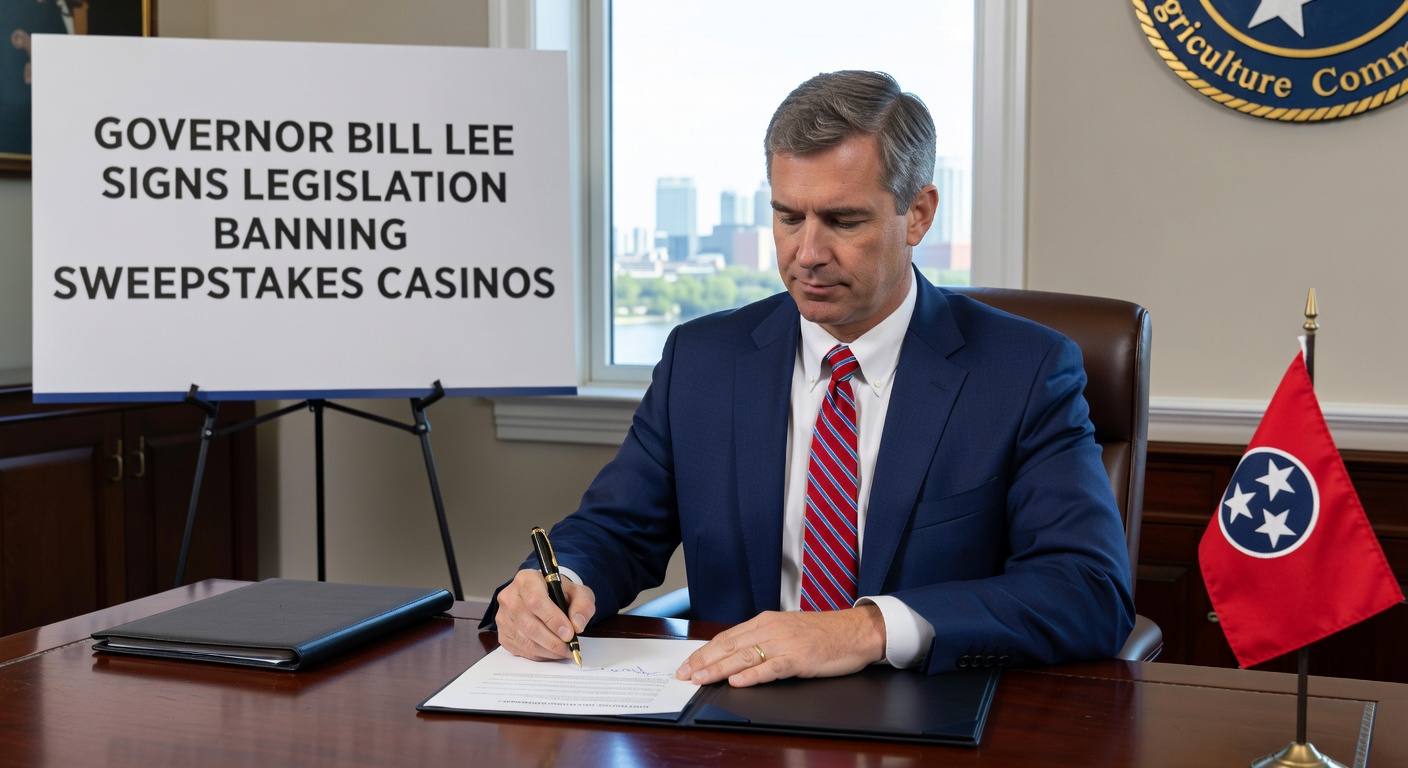
Tennessee Governor Bill Lee signed legislation identified as HB 1885 and SB 2136 that classifies sweepstakes casinos as unlawful gambling under the state's consumer protection laws, and the measure took effect right away upon approval. Multiple operators responded by withdrawing services from Tennessee residents, while earlier enforcement steps included cease-and-desist letters issued by the Attorney General. The changes amend existing statutes to bring these platforms under formal prohibition, which alters how online sweepstakes models operate within state borders.
Legislative Details and Scope
The bills target virtual currency sweepstakes games by redefining them through consumer protection frameworks rather than traditional gaming statutes, and this approach allows quicker implementation without new regulatory bodies. Operators must now treat these activities as illegal, which means they face potential penalties for continued access by Tennessee users. Data from legislative tracking sites shows the paired bills moved through both chambers before reaching the governor's desk for final action.
According to records available via capitol.tn.gov, the amendments focus on sweepstakes mechanisms that award prizes based on chance elements tied to virtual purchases. This structure previously allowed some platforms to argue they fell outside gambling definitions, yet the new language closes that interpretation. Those who studied similar measures in other states note the immediate effective date prevents any grace period for compliance.
Operator Responses and Market Shifts
Following the signing, several major sweepstakes casino providers announced they would block Tennessee IP addresses and cease account services for state residents, and this exit happened within days rather than weeks. Companies cited the updated legal classification as the direct reason for pulling back operations. Earlier Attorney General actions had already signaled increased scrutiny, so the legislation formalized what had been enforcement warnings.
Observers report that affected platforms sent notifications to users explaining the compliance requirements, while some redirected traffic or offered limited withdrawal windows before full shutdowns. The coordinated exits reduced available options for Tennessee players who previously accessed these sites, and industry tracking indicates dozens of services adjusted their geofencing protocols simultaneously. This pattern mirrors responses seen when other states clarified similar rules around virtual currency models.
Enforcement Background
Before the legislation passed, the Attorney General's office distributed cease-and-desist correspondence to operators suspected of serving Tennessee residents, and those letters highlighted potential violations under existing consumer statutes. The new bills build on that foundation by explicitly including sweepstakes formats in the prohibited category. Figures from state records reveal a steady increase in such notices over preceding months, which set the stage for legislative action.
People familiar with the timeline point out that the paired House and Senate versions aligned closely in language, which sped final approval. The consumer protection angle means violations can trigger civil remedies alongside any criminal considerations, giving regulators broader tools. Research from legal databases shows this method has been tested in comparable jurisdictions where immediate effect dates limited prolonged litigation.
Broader Regulatory Context
Tennessee maintains strict controls on most forms of gambling, and the sweepstakes ban fits within that established framework by extending oversight to online variants. State officials coordinated the effort across branches, which allowed the quick transition from letters to statute. Data compiled by legislative services indicates the bills received bipartisan support during committee reviews, although details on specific votes remain in public records.
Those who've followed enforcement trends note that operators often monitor multiple states for similar developments, and the Tennessee action prompted some platforms to review their national strategies. The immediate effective clause meant no transitional period existed for technical adjustments, forcing abrupt service terminations. External links to bill texts on legiscan.com provide full wording for anyone examining the exact amendments to consumer protection sections.
Conclusion
The signing of HB 1885 and SB 2136 marks a clear expansion of Tennessee's approach to online sweepstakes activities by placing them under consumer protection prohibitions with instant effect. Operators have adjusted by exiting the market, which follows prior Attorney General interventions. Public records and operator statements document these developments without extended delays or appeals processes at this stage.