How Server Uptime Patterns Affect Bonus Claim Windows Across Synchronized Gaming Apps
Willa Foster · Aug 26, 2026
How Server Uptime Patterns Affect Bonus Claim Windows Across Synchronized Gaming Apps
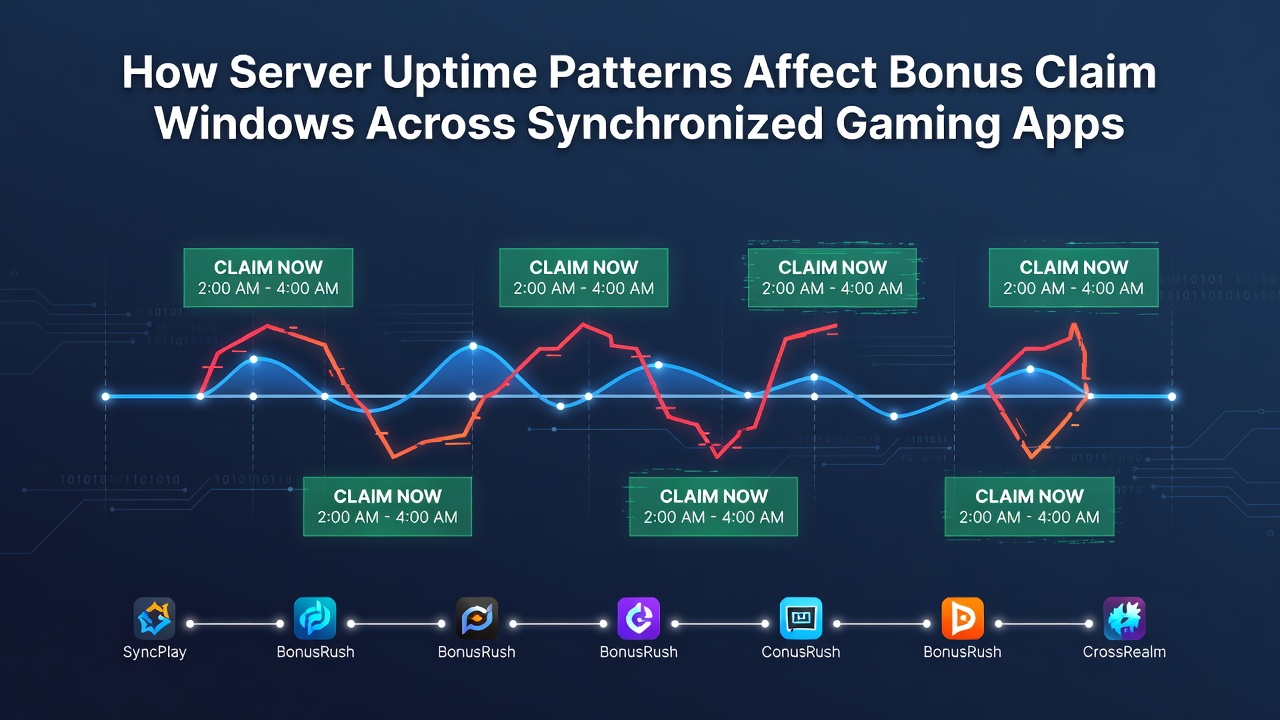
Server uptime patterns in synchronized gaming apps determine when players can successfully claim time-sensitive bonuses, because these systems rely on continuous connectivity between user devices and central servers to process claims within narrow windows. Data from industry reports indicates that even brief periods of downtime create cascading delays, as bonus timers continue running regardless of server availability, and players lose access until connectivity resumes.
Understanding Server Uptime in Multi-Device Gaming Environments
Synchronized gaming apps maintain consistent user sessions across phones, tablets, and desktops through constant server communication, while bonus claim windows function as fixed intervals that expire based on server timestamps rather than local device clocks. Researchers at the University of Nevada, Las Vegas have documented how maintenance schedules, traffic spikes, and regional outages shift these windows in measurable ways, because synchronized platforms must reconcile data across multiple endpoints simultaneously.
Patterns emerge when servers experience recurring downtime during peak evening hours or scheduled weekly maintenance, and these interruptions align with bonus expiration cycles in apps that distribute rewards on a 24-hour or 48-hour rotation. Observers note that apps using cloud-based synchronization often show higher resilience than those on dedicated hardware, yet both types face challenges when regional network congestion coincides with bonus activation periods.
Impact of Downtime on Claim Windows
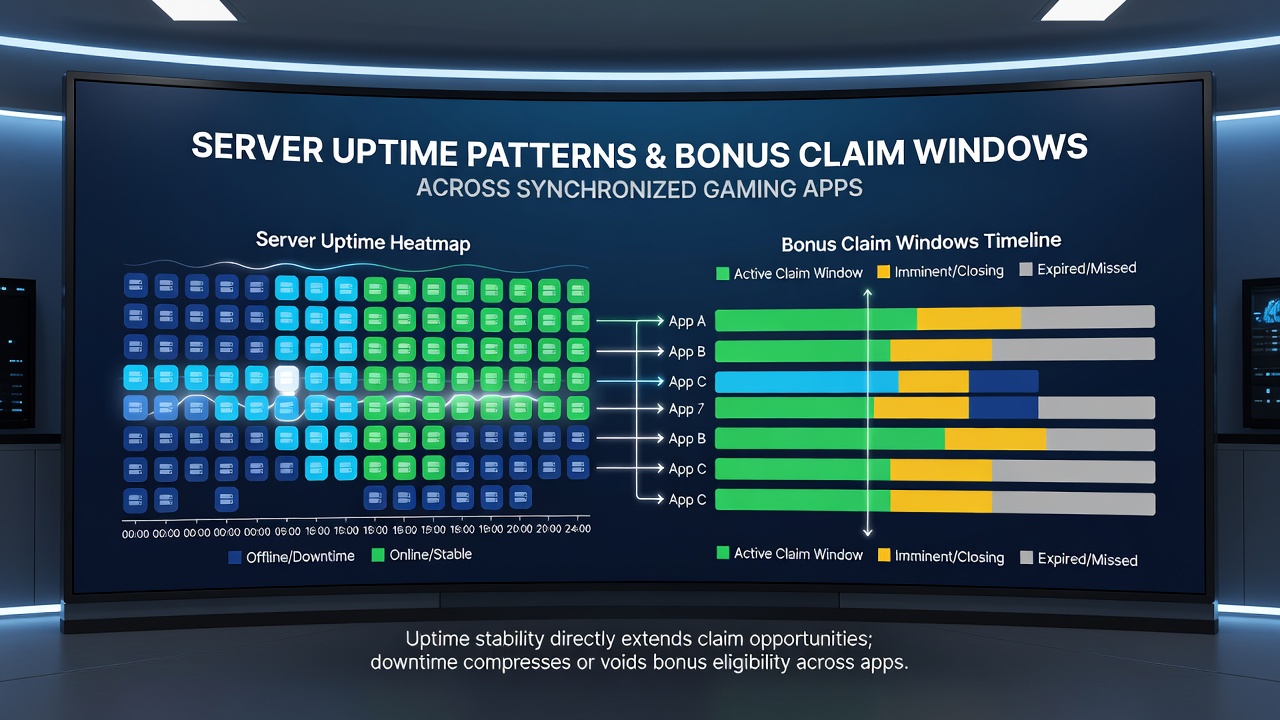
When servers go offline, bonus claim requests queue or fail outright, and the remaining time on active offers continues to decrease because the central system clock does not pause. Studies have shown that claims attempted during a 15-minute outage window often register as expired once service restores, particularly in apps that enforce strict server-side validation before crediting rewards. This creates situations where players on different devices encounter inconsistent outcomes, since one device might process a claim just before an outage while another misses the window entirely.
August 2026 data collected from several North American platforms revealed that synchronized apps experienced an average of 2.3 hours of cumulative downtime per week, with the majority occurring between 8 PM and 11 PM local time across multiple time zones. Those patterns overlapped directly with common bonus claim deadlines, resulting in measurable reductions in successful redemptions during affected periods.
Technical Factors Driving Uptime Variability
Load balancing across distributed servers helps mitigate single-point failures, yet synchronization protocols still require all connected devices to report status updates within tight tolerances. When one regional server experiences latency, the entire network may throttle claims to prevent data conflicts, and this throttling extends the effective length of bonus windows in some cases while shortening them in others. Engineers have observed that apps using blockchain-based ledgers for reward tracking show different vulnerability profiles compared with traditional database systems, because ledger confirmations add extra steps that become bottlenecks during partial outages.
Geographic distribution of servers plays a role as well, since players in one region may lose access while those in another continue uninterrupted, and this uneven availability creates disparities in claim success rates across the same synchronized app. Reports from the Australian Communications and Media Authority highlight how cross-border data routing introduces additional variables, particularly when regulatory requirements force certain traffic through monitored gateways that occasionally experience congestion.
Player Experience and System Design Responses
Users often discover that attempting claims during known maintenance windows leads to repeated failures, prompting many to adjust their activity patterns based on published uptime histories. Developers respond by implementing grace periods or queued processing that attempts claims again once servers stabilize, although these features do not always align with the original bonus expiration rules. Case examples from platforms operating in multiple jurisdictions show that synchronized systems with redundant regional nodes reduce the frequency of missed claims, because failover mechanisms activate before full outages occur.
Monitoring tools now track uptime metrics in real time and correlate them with bonus activity logs, allowing operators to identify recurring patterns that affect claim rates. Those who have analyzed these correlations find that certain hours of the day consistently produce higher failure rates, leading some platforms to stagger bonus windows or extend them during anticipated high-traffic periods.
Conclusion
Server uptime patterns directly shape the reliability of bonus claim processes in synchronized gaming apps through their influence on timing, validation, and cross-device consistency. As platforms continue to expand across regions and devices, the relationship between uptime metrics and reward accessibility remains a central factor in system performance. Ongoing monitoring and adaptive design approaches help address these interactions, while data from regulatory and academic sources continues to inform how operators structure their synchronization and claim mechanisms.