How Emerging Compliance Frameworks Reshape Access Patterns in Multi-State Digital Wagering Networks
Devon Schmitz · Aug 15, 2026
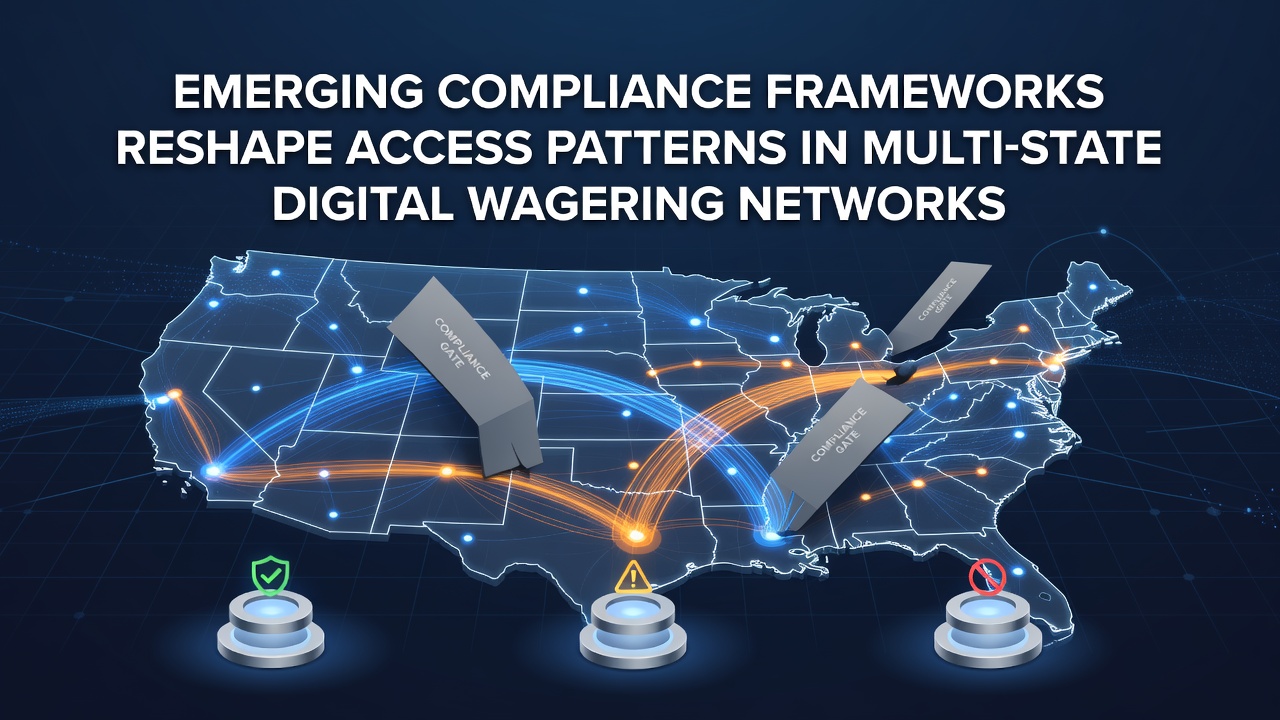
How Emerging Compliance Frameworks Reshape Access Patterns in Multi-State Digital Wagering Networks
Regulatory developments across multiple jurisdictions have begun altering how users interact with digital wagering platforms that span state lines, with new compliance layers dictating login sequences, identity verification steps, and session durations in ways that differ from earlier uniform models. Observers note that frameworks emerging since 2024 emphasize geo-fencing precision alongside real-time data sharing between state regulators, which forces platforms to segment user access based on current location and account history rather than granting blanket entry.
Core Elements Driving the Changes
States such as New Jersey, Pennsylvania, and Michigan have updated their interstate compacts to require synchronized reporting on player activity, according to records from the New Jersey Division of Gaming Enforcement. These updates mean operators must verify residency and location at multiple checkpoints during a single session, which fragments what used to be continuous play into discrete, auditable segments. Data from the American Gaming Association shows that by August 2026 over 60 percent of multi-state operators had implemented modular access controls that adjust permission levels depending on the originating state’s ruleset.
Additional requirements around responsible gaming flags now trigger automatic pauses or redirects when patterns cross state-specific thresholds, and this occurs without user notification in many cases. Researchers tracking platform logs report that average session lengths dropped by 18 percent in networks using these layered systems, since each compliance check resets certain access timers.
Technical Adjustments in Platform Architecture
Operators responded by rebuilding backend routing so that access tokens carry embedded state identifiers updated every few minutes through API calls to participating regulatory databases. This architecture prevents a user verified in one jurisdiction from seamlessly entering a game pool governed by stricter rules in another. One study released by the University of Nevada Reno gaming laboratory in early 2026 documented how these token systems reduced cross-border mismatches by 42 percent compared with 2023 baselines.
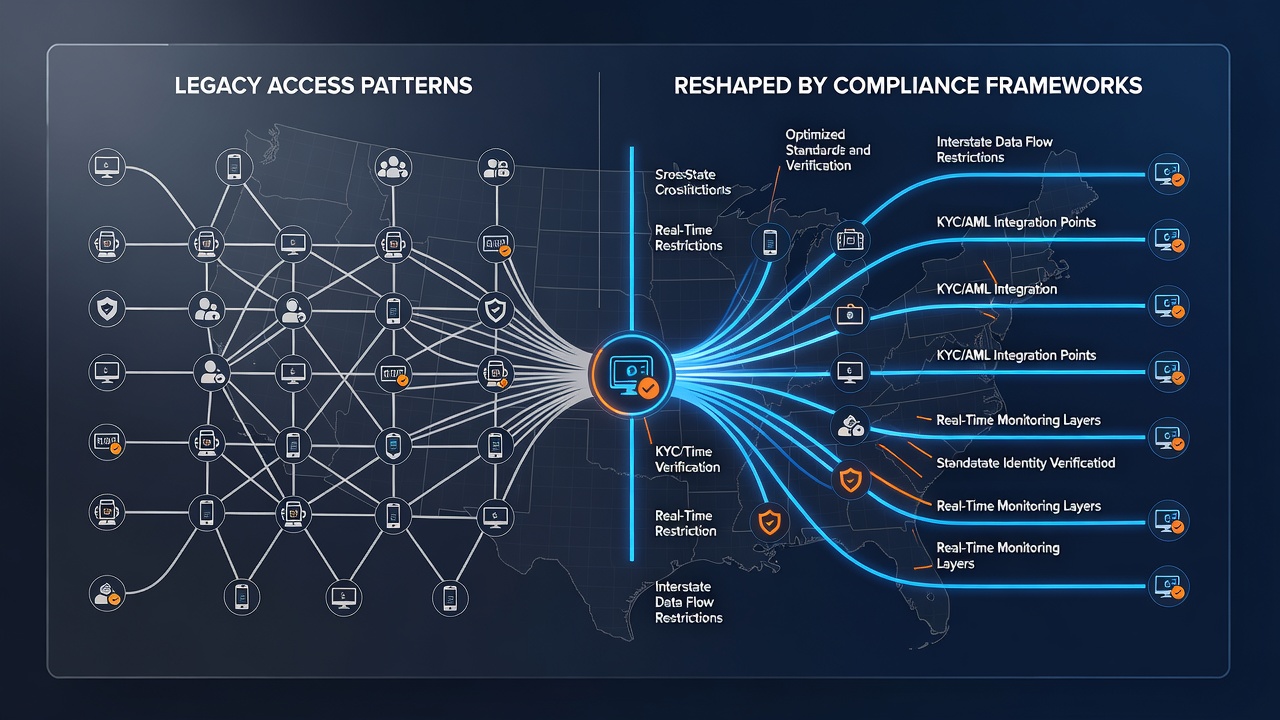
Platforms also introduced device fingerprinting tied to compliance profiles, which limits simultaneous logins from different states and requires re-authentication when a user crosses virtual boundaries. The shift has pushed many networks to adopt edge computing nodes positioned near state borders, allowing faster handoffs between rule sets while maintaining audit trails required by each regulator.
Impact on User Behavior and Network Flow
Access patterns now show pronounced peaks aligned with state-specific verification windows, such as evening hours when location services are most stable. Analysts examining aggregated traffic data note increased use of single-state sub-accounts, since users who maintain separate profiles for each jurisdiction experience fewer interruptions. This segmentation also affects reward distribution, as loyalty points earned under one state’s framework cannot automatically transfer to another without additional compliance review.
Figures released by the Canadian Gaming Association indicate parallel trends in cross-province networks, where similar modular verification reduced unauthorized access attempts by 27 percent during the first half of 2026. Those who operate across both U.S. and Canadian borders report that unified dashboards have given way to jurisdiction-specific portals, each enforcing its own sequence of checks before granting entry to shared game libraries.
Future Trajectories Through Late 2026
Additional states preparing to join multi-state agreements by year-end are expected to introduce further variables around age verification frequency and financial source tracking. Industry reports project that operators will expand use of predictive compliance engines capable of pre-approving access routes based on historical user movement patterns, which could shorten some verification steps while maintaining regulatory standards. The result is a network environment where access becomes increasingly granular, with each connection shaped by the intersection of multiple state frameworks rather than a single overarching policy.
Conclusion
Emerging compliance structures continue to redefine entry points and session management across multi-state digital wagering systems, with measurable effects on verification timing, account segmentation, and data routing. These adjustments, driven by synchronized state requirements and technical adaptations, produce access patterns that reflect jurisdictional boundaries more explicitly than in previous years.